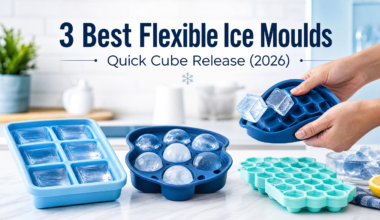
Yes, you can freeze broth, stock and sauces in ice cube trays — and it’s one of the easiest ways to keep small, recipe-ready portions on hand. Simply cool the liquid quickly, pour it into the trays, freeze until solid, then transfer the cubes to a labelled freezer bag or container. Cube sizes vary between trays, so check how much yours holds — then you can grab exactly what a recipe calls for without defrosting a whole litre.
Key takeaways
- Cool before freezing. Cool cooked stock or sauce before it goes in the freezer — sitting the pan in a sink of cold water speeds this up (Good Housekeeping).
- Portion first. GOV.UK advises dividing food into smaller portions before freezing, and ice cube trays do this job perfectly.
- Freeze cubes first, then bag them. Once solid, pop the cubes out and store them in a sealed bag or container to save space and protect against freezer burn.
- Use within 4 to 6 months for best flavour, kept at a steady -18°C (Academy of Chocolate food storage guidance).
- Defrost safely. Thaw frozen cubes in the fridge, or drop them straight into a hot pan or simmering dish.
Why freeze broth and sauce in ice cube trays?
Homemade stock is a labour of love, and it doesn’t keep in the fridge for long — typically no more than about three days (Good Housekeeping). Freezing solves that, and tray-freezing goes one better: instead of one solid block, you get dozens of ready-portioned cubes that thaw in minutes.
It’s also handy for odds and ends. That last splash of passata, the dregs of a gravy boat, a few tablespoons of leftover stock — freeze them now and you’ll have flavour boosters on standby. Chicken, beef, vegetable and bone broth all freeze well at home, and freezing is one of the most effective ways to extend shelf life without preservatives.
What a cube actually holds
Most standard UK ice trays make cubes of around 30ml — roughly two tablespoons. Larger trays or silicone moulds can hold 60ml or more. Check your tray with a tablespoon of water before you commit a whole pan of stock to it, and you’ll know exactly how many cubes equal a cup or a litre. Our guide to stackable ice trays with lids covers options that keep odours contained while you freeze.
How to freeze broth in ice cube trays, step by step
This is the whole process, from hob to freezer bag:
- Strain the liquid. Remove bones, veg and herbs so you’re freezing clean broth — straining also makes the cubes easier to use straight into a pan.
- Cool it quickly. Sit the pan of strained stock in a sink of cold water to speed up cooling (Good Housekeeping). Don’t leave food standing around at room temperature; GOV.UK notes that bacteria can grow if food lingers between 8°C and 63°C.
- Spoon into clean, dry trays. Fill each compartment nearly to the top. Leaving very little headspace and using a tight seal helps prevent freezer burn, which is the most common quality issue with frozen broth.
- Freeze until solid. A few hours is usually enough; overnight is foolproof. Freeze fresh food before its use-by date and note the date you froze it, as GOV.UK recommends.
- Pop, bag and label. Transfer the frozen cubes to a labelled freezer bag or sealed container with the date and contents. A tray of “chicken stock, Feb” is only useful if you can tell it apart from “fish stock, Feb”.
Do I need a lid on the tray?
A lid isn’t essential for a quick freeze, but it helps on two counts: it stops the liquid absorbing freezer odours, and it makes stacking trays practical. If your trays don’t come with lids, cover them tightly with cling film until frozen, then decant the cubes. Trays designed for easy cube release also save you wrestling with stubborn stock cubes — flexible silicone tends to be the most forgiving.
Freezing sauces in ice trays: what works best
The same method applies to sauces, with a few tweaks worth knowing:
- Tomato-based sauces freeze beautifully. Portion them for pizza bases, pasta for one, or adding depth to soups.
- Gravy and pan sauces freeze well too, though they may need a good whisk when reheated to bring the texture back together.
- Cream and dairy-based sauces can separate or grain slightly on thawing. They’re usually fine stirred into a hot dish, but don’t expect them to look silky on their own.
- Pesto and herb oils are ideal cube candidates — top each frozen cube with a drizzle of olive oil if you want to protect the colour, and keep them sealed well.
The main things that affect quality are fat content, seasoning and how long the liquid stays in the freezer. Broth is mostly water, so it freezes predictably; richer, fattier sauces behave a little differently but still work well in small portions.
How long do frozen broth and sauce cubes keep?
For best quality, use frozen broth within 4 to 6 months, whether homemade or store-bought and frozen after opening; well-sealed bone broth often keeps for a similar period or longer (Academy of Chocolate guidance). Kept in an airtight container at a consistent -18°C, broth can remain safe beyond that, but flavour and texture gradually decline.
Good Housekeeping’s guide to freezing stock suggests up to three months for stock frozen in freezer bags — a sensible target if you notice you’re not getting through your stash quickly. Either way, the practical rule is simple: label everything with the date, and use the older cubes first. Freezer burn — dulled flavour and off tastes caused by air exposure — is the most common issue, and it doesn’t usually make broth unsafe, just less pleasant.
A space-saving trick from the stovetop
If you’re short on freezer space, reduce your stock before freezing. Pour the strained stock into a wide pan and boil it down to concentrate it, then cool, freeze and label it clearly as concentrated so you remember to add water back when you use it (Good Housekeeping). Concentrated stock in cubes is remarkably potent — one cube can go a long way in a pan of rice or a braise.
Defrosting and using your cubes safely
Food must be fully defrosted before cooking unless the instructions say otherwise, and the safest place to thaw it is the fridge (GOV.UK). For a couple of broth cubes, though, you often don’t need to defrost at all:
- Drop them straight into hot dishes. Frozen stock or sauce cubes melt quickly in a simmering soup, risotto, bolognese or pan sauce.
- Thaw in the fridge for cold or gentle uses. If you need liquid broth at room temperature — for a vinaigrette, say — move cubes to the fridge several hours ahead.
- Use a sealed container under cold running water if you’re in a hurry and can’t wait for the fridge — that’s GOV.UK’s recommended alternative, and it’s much safer than leaving food on the counter.
Once defrosted, keep the broth or sauce in the fridge and use it within a couple of days, following normal food safety guidance. If you’ve thawed more than you need, stir the extra into a cooked dish and freeze that meal instead.
Which trays work best for stock and sauce cubes?
Almost any ice tray will do the job, but a few features make life easier:
- Flexible silicone releases frozen broth cubes far more readily than stiff plastic — no cracking or bending required.
- Lids keep freezer smells out and let you stack trays neatly. If your freezer is a crowded place, stackable trays with lids earn their keep.
- Larger compartments suit sauces you use in bigger quantities, like pasta sauce or gravy portions.
One thing to avoid: don’t leave broth sitting in plastic trays long-term. The trays are for freezing, not storage — once the cubes are solid, move them to bags so your trays are free for the next batch (and for actual ice). If your trays have seen better days or you fancy something fun for the bar cart alongside all that kitchen prep, our skull ice tray buyer’s guide is a good starting point.
What else can you freeze in ice cube trays?
Once you’ve got the hang of broth cubes, the freezer is your oyster: wine left over from a bottle, coffee for iced drinks, and lemon and lime juice all freeze well in small portions and thaw the same way. The principle is always the same — freeze small, seal well, label clearly.
FAQ
How much liquid is in one ice cube?
A standard ice cube holds about 30ml, or roughly two tablespoons. Four cubes is therefore around 120ml — close to half a cup — and you can scale up from there. Measure once with water to confirm your tray’s capacity.
Can you freeze stock in ice cube trays with herbs or fat in it?
Yes, though strained stock freezes most cleanly. Broth freezes predictably because it’s mostly water; fat and seasoning affect quality more than safety. Skim excess fat before freezing for the clearest cubes, or leave it in if you want the extra flavour.
Do I have to cool stock before freezing it?
Yes — GOV.UK advises cooling cooked dishes before putting them in the freezer. Sitting the pan in a sink of cold water speeds this up (Good Housekeeping). Hot food in the freezer also warms everything around it, which isn’t kind to your other frozen goods.
How long can frozen broth cubes stay in the freezer?
For best flavour, use them within 4 to 6 months (Academy of Chocolate guidance); Good Housekeeping suggests up to three months for stock. Stored airtight at -18°C they remain safe longer, but the flavour will gradually fade and freezer burn may set in if the seal isn’t tight.
Can I refreeze thawed broth?
No — use thawed broth or sauce promptly and don’t refreeze it. If you’ve thawed too much, the best move is to cook with the surplus and freeze the finished dish instead.
The bottom line
Freezing broth and sauce in ice cube trays takes about ten minutes of actual effort and repays you every time a recipe calls for “a splash of stock”. Cool it, cube it, bag it, label it — and your freezer becomes a shelf of ready-made flavour. If you’re kitting out your freezer for the job, have a browse of our round-up of the best stackable ice trays with lids to keep everything tidy.