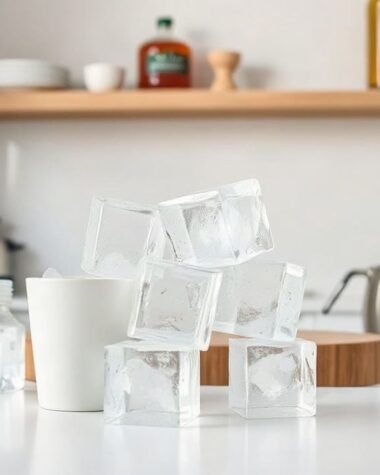
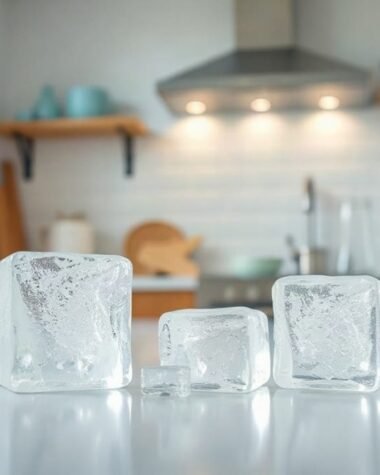
Fast-freezing vs slow-melting: choosing for your drink comes down to two separate questions
How quickly your ice was frozen decides how clear, hard and flavour-neutral it will be, while how slowly it melts decides how long your drink stays balanced. In short: freeze water as fast as your home equipment allows for better-quality cubes, then choose a low-surface-area shape such as a sphere or large square if you want slow dilution, or smaller, high-contact ice if you want a fast chill. Getting both right is easier than it sounds once you know what is happening in your freezer and in your glass.
Key takeaways
- Freezing speed controls ice crystal size: faster freezing produces smaller crystals and better overall ice quality, while slow freezing leads to larger crystals and more damage to whatever is being frozen (Agriculture.Institute).
- Sphere ice melts more slowly than standard cubes of the same volume because it has the lowest possible surface-area-to-volume ratio; one side-by-side bourbon test measured roughly 0.113 g/s for a sphere versus 0.162 g/s for cubes (Euhomy).
- Cubes cool a drink faster and further at first, because their corners and edges transfer heat quickly (Euhomy).
- Nugget ice chills almost instantly and carries flavour, making it ideal for sodas, iced coffee and tall drinks rather than slow sipping spirits (Euhomy).
- For most home drinkers, the winning move is fast freezing in the freezer plus a large, dense shape in the glass.
Why freezing speed shapes ice quality in the first place
Food is mostly water. Fruits and vegetables can be over 90% water, while fresh meat and fish sit at 60 to 80%. When that water freezes, it forms ice crystals, and the size and distribution of those crystals determine the quality of the final product (Agriculture.Institute).
Quick freezing produces many small crystals, which is why commercially quick-frozen food comes out of the bag firm and intact. Slow freezing gives water time to organise into larger crystals, which is what leads to mushy, watery results and measurable drip loss when the product thaws (Agriculture.Institute).
What this means for your ice cubes
Ice does not have cell walls to burst the way fruit does, but the same physics applies to clarity and hardness. Water frozen slowly in a typical freezer traps air and impurities as the ice front advances, which is why a cube frozen overnight in a standard tray often looks cloudy in the middle. The practical takeaway for home ice makers is simple: give your trays the coldest, most stable spot in the freezer, use clean water, and avoid repeatedly opening the door during the freeze. Our guide to the science of freezing and why ice quality varies covers this in more depth.
Directional freezing: the home trick worth knowing
Cloudy ice forms because impurities get pushed to the centre as water freezes from all sides at once. If you freeze water in an insulated container so it solidifies from the top down, the clear ice ends up on top and the cloudy portion stays at the bottom, where you can cut or pour it away. It takes a little planning, but it costs nothing and noticeably improves the look of a spirit served over a single large piece of ice.
Which ice shape melts slowest in your glass?
Here is the neat bit of geometry: a sphere has the smallest possible surface area for a given volume, so it presents the least surface for heat to attack. That is why sphere ice usually melts more slowly than a standard cube of the same volume under the same conditions (Euhomy).
In one side-by-side bourbon test, a single ice sphere lost mass at about 0.113 g per second, while standard cubes melted at about 0.162 g per second. Over the test, the cubes lost 23.3 g of ice against 19.8 g for the sphere (Euhomy).
The trade-off: slower melt means slower cooling
The same low surface area that slows melting also slows heat transfer. In that same test, five cubes actually chilled the drink further and faster, reaching a lower final temperature in 144 seconds, while the sphere took 176 seconds to reach its endpoint (Euhomy). So a sphere is not simply “better”; it is better when your priority is keeping a properly chilled drink undiluted for longer.
Quick comparison table
- Large sphere or large square block: slowest melt, gentle initial chill, best for spirits you sip slowly.
- Standard cubes: fast initial cooling, faster dilution, the versatile all-rounder for most mixed drinks.
- Nugget ice: near-instant chill and a chewable texture, but it dilutes quickly; best for sodas, iced coffee, smoothies and fruit tea (Euhomy).
- Crushed or small ice: maximum surface area, maximum speed, best for blended drinks and quick-serving.
How does ice actually chill a drink?
Ice melts at 32 °F, and while it is melting it absorbs latent heat without its own temperature rising. That means chilling power comes from how much heat can reach the ice surface, which is driven by exposed area, liquid movement and temperature difference (Euhomy).
This explains a rule that surprises many home bartenders: more, smaller ice chills a drink faster but waters it down sooner, while less, bigger ice cools more gently and keeps the drink stronger for longer. Neither approach is wrong. A shaken cocktail served over fresh cubes is meant to be drunk quickly; a two-ounce pour of whisky over a single large sphere is meant to last the evening.
Which ice should you use for which drink?
Spirits you sip neat or with a little water
Choose one large piece: a sphere or a big square block. Low surface area means slow dilution, so the strength of the drink fades gradually rather than within minutes. For the biggest, densest blocks at home, square silicone moulds are the easiest starting point, and our roundup of the best square ice trays for slow-melting ice compares the main options by size and material.
Stirred cocktails such as an Old Fashioned or Negroni
A single large cube or sphere in a mixing glass does double duty: it chills during the stir and keeps dilution controlled in the serving glass. Stirring with big ice takes slightly longer than with small ice to reach the same temperature, so stir a little longer and taste as you go.
Highballs, sodas and iced coffee
Here speed is the friend, not the enemy. Nugget ice is compressed from soft flakes into small, aerated pieces, and its porous interior exposes a wide contact area to liquid, so the temperature drops quickly and a touch of flavour clings to each nugget (Euhomy). That is exactly what you want in a tall glass of cola or a cold brew, where a bit of dilution is part of the drink.
Blended and frozen drinks
Small or crushed ice is the only sensible choice, because the blender needs maximum surface area to break the ice down evenly. Large blocks can leave unblended chunks and strain the motor.
Does clearer ice really matter, or is it just for looks?
Mostly, it is about looks and purity of taste rather than melt speed. Clear ice has fewer trapped air pockets and impurities, so it looks striking and contributes no off-flavours. Melt rate, however, is governed mainly by shape, surface area and temperature, so a cloudy sphere and a clear sphere of the same size will behave very similarly in the glass. If you serve a lot of straight spirits, clear ice is worth the small extra effort; if your ice is going into iced coffee or a jug of fruit tea, standard cubes from a clean tray are perfectly good.
A simple home routine for better ice
- Fill trays with filtered or boiled-then-cooled water if cloudiness bothers you.
- Place trays on a flat surface at the back of the freezer, where the temperature is lowest and most stable.
- Freeze undisturbed for 12 to 24 hours so the water freezes as quickly and evenly as your freezer allows.
- Transfer finished cubes to a sealed bag so they cannot absorb freezer odours.
- Match the shape to the drink before you pour, using the comparison table above.
What about temperature, storage and serving?
While ice melts at 0 °C (32 °F), it absorbs latent heat as it melts, so chilling depends more on melt rate than on starting temperature (Euhomy). In practice, a slower-melting shape such as a sphere gives you longer chill time with less dilution.
Storage matters too. Loose cubes in an open freezer bin pick up aromas from everything around them, from onions to leftovers. A lidded container or sealed bag keeps ice neutral. And if you are preparing for guests, freeze a second batch in advance so you are never topping glasses with half-melted, wet ice that has already given up much of its chilling power.
Fast-freezing vs slow-melting: putting it all together for your drink
The two ideas work in partnership rather than in competition. Freeze fast at home to get hard, clean, good-quality cubes, then slow the melt in the glass by choosing a shape with low surface area. That combination gives you the best of both worlds: ice that tastes of nothing and dilutes only when you want it to.
A worked example makes it concrete. Suppose you are pouring a whisky after dinner. A large sphere melted at roughly 0.113 g per second in the bourbon test cited above, compared with 0.162 g per second for standard cubes, which is around 30% less melt per second (Euhomy). Over a leisurely half-hour drink, that difference adds up to noticeably less dilution and a drink that still tastes like the spirit you paid for. Flip the scenario: guests arriving for iced coffee in ten minutes, and nugget or small cubes are the better call, because the fast chill matters more than slow dilution (Euhomy).
For a touch of presentation on top of all this, decorative ice is a fun upgrade once the basics are sorted. Edible flowers frozen into large cubes look beautiful in summer drinks, and our guide to making edible flower ice cubes at home walks you through the process step by step.
FAQ
Does freezing water faster make ice melt slower?
Not directly. Freezing speed mainly affects ice crystal size, while melt rate in the glass is governed mostly by shape and surface area. In food freezing, quick freezing produces smaller crystals and helps preserve quality (Agriculture.Institute), and choosing a sphere or large block gives you slow melting. Do both for the best result.
Are sphere moulds worth buying for home use?
If you enjoy sipping spirits, yes. A sphere has the lowest surface-area-to-volume ratio of any shape, so it melts more slowly than a same-volume cube, as the bourbon test data above shows. If you mostly drink highballs and soft drinks, standard cube trays remain the more practical everyday choice.
Why is my homemade ice cloudy?
Cloudiness comes from trapped air and impurities that get pushed to the centre as water freezes from all sides. Freezing in an insulated box so ice forms top-down leaves clear ice on top and cloudy ice at the bottom, which you can discard. Filtered water helps at the margins, but directional freezing makes the real difference.
Is nugget ice bad for drinks?
No, it is just suited to different drinks. Nugget ice chills very quickly and holds a little flavour thanks to its porous structure, which makes it excellent for sodas, iced coffee, smoothies, fruit tea and tall mixed drinks (Euhomy). It dilutes faster than solid cubes, so it is a poor match for slow-sipping spirits.
How long should I freeze ice trays for solid cubes?
In most home freezers, 12 to 24 hours produces fully solid, well-hardened cubes. Partially frozen ice melts faster and waters drinks down sooner, so patience genuinely pays off. Freeze trays flat and undisturbed for the most even results.
The final pour
Great drinks rest on two small decisions made before you ever pour: how fast you froze the water and what shape you chose to put in the glass. Freeze fast, store clean, and match surface area to drinking speed, and your ice will work for you instead of against you. If you are ready to upgrade the slow-melting side of the equation, start with a dedicated large-cube tray and see the difference in your very next glass.
Sources
- Differences Between Quick and Slow Freezing Methods – Agriculture Notes by Agriculture.Ins
- Sphere Ice vs Cubes: Which Melts More Slowly?
- Nugget vs. Bullet vs. Cube Ice: Which Shape Wins?