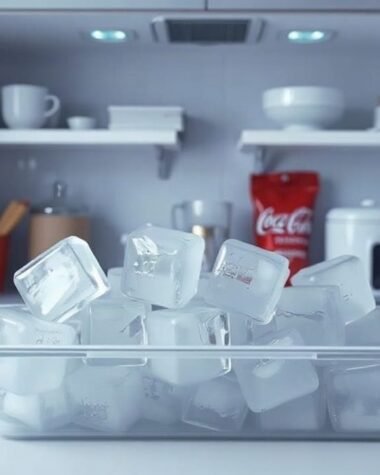
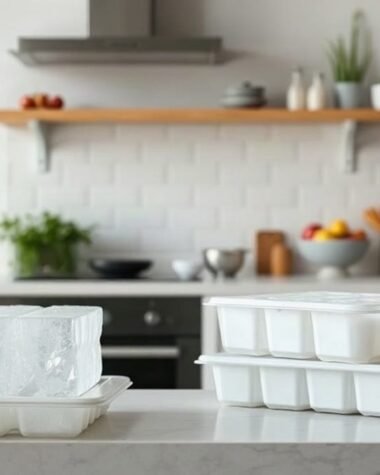
Why does ice quality vary so much?
Ice quality varies because of three things: how quickly water freezes, what is dissolved in the water, and how the freezing happens inside the tray. Fast freezing creates many small ice crystals, slow freezing creates fewer large ones, and dissolved gases and minerals get pushed out of the water as it freezes, ending up concentrated in cloudy cores and cracks.
That sounds like food-lab territory, but the same principles that explain why frozen berries turn to mush also explain why your home-made ice is cloudy while the premium block at a cocktail bar is glassy and dense. Once you understand the science of freezing, ice quality stops being luck and becomes something you can control. This guide walks through what is actually happening inside your freezer, why crystal size matters even for something as simple as a cube, and the practical changes that make the biggest difference at home.
Key takeaways
- Crystal size is the number one factor. Rapid freezing produces many small ice crystals and less structural damage; slow freezing produces large crystals that cause more disruption (Agriculture.Institute).
- Water expands as it freezes. That expansion, plus the formation of ice crystals, is what pushes impurities into cloudy patches and causes cracked or uneven cubes.
- Dissolved gases and minerals do not freeze with the water. They get concentrated in the last parts to freeze, which is why cloudy cores appear in the middle of cubes.
- Temperature stability matters. Frozen foods and ice generally hold their quality best when stored cold and undisturbed; frozen storage is not a passive process and quality changes keep unfolding over time (Agriculture.Institute).
- You do not need fancy equipment. Boiled or filtered water, a clean tray, and a cold, undisturbed freezer will noticeably improve everyday ice.
What actually happens when water freezes
At its core, freezing is the removal of heat energy until the water inside crystallises into ice. Two thermodynamic concepts govern the process: sensible heat, which is the heat removed as water cools down, and latent heat, which is the heat released as water actually changes state from liquid to solid (Agriculture.Institute). That latent heat is why freezing takes longer than simply chilling water to zero degrees: every gram of water has to give up a substantial amount of energy before it can solidify.
As water turns to ice, it expands. That expansion is not cosmetic; it is a structural event. In food, ice crystals formed during freezing damage cell walls and weaken structure, and moisture migrates out of the food as the crystals grow (Cook Once Eat Later). Water in an ice tray has no cells to rupture, but the same physics applies: expanding ice strains the tray, cracks larger cubes, and squeezes dissolved gases and minerals into whatever space remains, which is usually the centre of the cube.
Why the middle of a cube freezes last
Freezing happens from the outside in. Water touching the tray walls freezes first, forming a shell of ice around a liquid core. As the shell thickens, the remaining water becomes more concentrated with whatever it carries: dissolved air, minerals from tap water, and any absorbed fridge odours. When that core finally freezes, the impurities get trapped, producing the familiar cloudy patch inside otherwise clear ice. This is the same reason slow freezing creates large, disruptive crystals that damage cells and cause separation when things thaw (Agriculture.Institute): the parts that freeze last tell the story of everything that was in the water.
Why crystal size matters (yes, even for ice cubes)
The single biggest quality factor in freezing is the size of the crystals that form. Rapid freezing produces many small ice crystals that cause far less mechanical damage, while slow freezing creates large crystals that are far more disruptive (Agriculture.Institute). The science of freezing explains why ice quality varies so dramatically between a freezer that runs consistently cold and one that drifts warm and cold throughout the day.
For a cocktail cube, crystal structure shows up in three practical ways:
- Clarity. Small, tightly packed crystals scatter light less and trap fewer impurities, giving a denser, more transparent cube.
- Density and melt rate. Clearer, better-formed ice looks better in the glass and is what bartenders prefer for spirits, which is one reason large format cubes are popular; we cover the dilution side of this in our guide to large ice cubes versus small ones.
- Structural integrity. Large crystals and expansion stress cause cracking and shards, so poorly frozen cubes split when you drop them into a glass.
Temperature swings: the silent ice killer
Frozen food is not a passive process; physical and chemical changes keep unfolding during storage, and fluctuating temperatures drive much of the damage (Agriculture.Institute). Ice cubes sitting in your freezer for weeks go through the same cycle. Frozen foods can undergo gradual quality changes during storage (Agriculture.Institute), so ice that sits in the freezer for weeks is unlikely to be at its best. Freshly frozen, undisturbed ice is generally the safer bet for clean-tasting drinks, since ice can sit uncovered in a freezer alongside strong-smelling food.
Does the type of water change ice quality?
Yes, and it is one of the easiest things to fix. Tap water carries dissolved minerals (calcium, magnesium and others) and dissolved gases. None of these freeze neatly with the water molecules; as the cube solidifies, they are pushed into the last-to-freeze core, along with any chlorine or off-smells the water picked up on its way to your tap. The result is a cloudy, sometimes odd-tasting centre even when the outer layer looks fine.
You have two levers here:
- Boil the water first. Boiled and cooled water is a popular home technique for tackling cloudy ice, and many ice enthusiasts report good results with it, although clear ice ultimately depends on how the water freezes. Let it cool, then freeze it. It is the same principle behind the directional freezing methods we explain in our article on why some ice is cloudy and how to fix it.
- Filter the water. Filtered water is another common home approach that may improve the taste of everyday ice, though clarity depends mostly on how the water freezes rather than on filtration.
A word of honesty about expectations: boiled or filtered water improves cloudiness but will not give you bar-quality clear ice on its own. Truly clear ice usually relies on directional freezing, where water freezes from one direction so impurities are pushed into a single removable section, rather than being trapped throughout the cube.
How can you get better ice at home? A practical checklist
You cannot retrofit a flash-freezing system into a domestic freezer, but you can borrow the principles that the food industry uses: freeze fast, freeze cold, and keep everything stable (Agriculture.Institute). Here is a checklist you can work through with any standard tray:
- Use the coldest setting your freezer offers for freezing day. A colder freezer removes latent heat faster, encouraging smaller crystals. Turn it back to your normal storage setting afterwards if you prefer.
- Pre-chill the tray and the water. Starting cold shortens the freezing window and reduces crystal growth time.
- Use boiled, cooled or filtered water. Fewer dissolved gases and minerals mean less cloudiness and better flavour.
- Freeze in the back of the freezer. The back is coldest and least disturbed by door openings.
- Freeze in thin layers or smaller compartments. Less depth means faster freezing throughout, mimicking the rapid-freeze approach used in commercial settings.
- Unmould and transfer to a sealed bag or container once solid. This protects the ice from absorbing freezer odours and from every-cold-then-warm cycling near the door.
- Use ice within a few days rather than weeks. Fresher ice is denser, clearer and tastes cleaner.
Tray design plays a role too. Silicone trays release cubes easily and often make larger formats, which suit slow-sipping drinks, while rigid plastic trays with lids protect ice from odours. Matching the tray to how you actually use ice is half the battle, whether that is cocktails, iced coffee or freezing herbs in olive oil cubes, which we cover in our herb freezing how-to guide.
Why does bad ice taste like the freezer?
Ice absorbs aromas. Because cubes sit uncovered in a freezer full of strong-smelling food, they pick up flavours over time; the ice essentially becomes a slow air freshener for your freezer, in reverse. Combine that with dissolved chlorine in unfiltered tap water, and you get that unmistakable stale taste even in visually perfect cubes.
The fixes are simple and mostly free:
- Seal ice in a bag or lidded container as soon as it is solid.
- Keep pungent foods (onions, fish, blue cheese) well wrapped and away from ice trays.
- Refresh your stock regularly rather than letting trays sit for months.
- Rinse the tray between uses; residual detergent and fridge dust both end up in the next batch.
What the food industry does differently (and what you can copy)
Commercial ice production looks different from a home freezer for a reason. Industrial freezing systems move heat out of the product quickly, using direct or indirect contact between the product and the cooling medium (Agriculture.Institute). Techniques like individual quick freezing, or IQF, freeze each item separately and rapidly, producing small crystals and minimal damage. Clear-ice machines at bars use a related idea: water is frozen directionally so that pure ice forms first and the impurity-rich water is left behind and discarded.
You cannot replicate IQF at home, but you can copy its logic. Anything that speeds up heat removal (colder freezer, pre-chilled tray, shallow water) or channels impurities away (directional freezing) moves your homemade ice closer to the commercial standard. The important part is not the equipment; it is understanding which variable you are attacking: crystal size, dissolved impurities, or temperature stability.
A worked example: improving a standard Saturday batch
Suppose you fill a plastic tray with cold tap water on Friday evening and freeze it on a medium setting, then use the cubes the following Friday. What has changed in that week? Crystals have grown larger through temperature cycling, surface frost has added trapped air, and the cubes have absorbed freezer aromas for seven days. Now run the same batch with the checklist: boiled and cooled water, a pre-chilled tray, the coldest setting, positioned at the back, unmoulded Monday into a sealed bag, used Wednesday. Same freezer, same tray, materially better ice. The difference is not mysterious; it is crystal size, purity and storage time, each fixed in turn.
FAQ
Why is my ice cloudy even though I use filtered water?
Cloudiness comes from trapped gases and minerals concentrated in the last-to-freeze core of the cube, not just from water impurities. Filtering helps, but the biggest gains come from boiling the water to remove dissolved gases and, for truly clear ice, using directional freezing so impurities collect in one discardable section.
Does hot water freeze faster than cold water?
The Mpemba effect (hot water apparently freezing faster under certain conditions) is debated and inconsistent; in everyday home freezers, cold or pre-cooled water is the reliable choice. Hot water does release dissolved gases when boiled and cooled, which genuinely improves clarity, so boil the water but let it cool before freezing.
Is slow-frozen ice actually worse for drinks?
Slow freezing produces larger crystals and more internal fractures, which makes ice cloudier, less dense and quicker to crack and dilute your drink. Faster, stable freezing produces the small, tightly packed crystals that give you dense, slower-melting cubes (Agriculture.Institute).
How long can I store ice cubes in the freezer?
Ice is best within a few days. It does not spoil in the sense of becoming unsafe, but it gradually absorbs odours, develops frost, and recrystallises as freezer temperatures fluctuate, so flavour and structure both decline over weeks.
Do expensive ice trays make a difference?
They change shape and release, not the physics. Silicone makes large formats easy to unmould and lidded trays block odours, both genuinely useful. But crystal size and clarity come from freezing technique and water quality, so no tray alone will fix cloudy or fast-melting ice.
The bottom line
The science of freezing explains why ice quality varies: crystal size, dissolved impurities and temperature stability do most of the work, and all three are within your control at home. Start with one change this week, probably boiled water and a sealed container for storage, then layer in the rest of the checklist as it becomes habit. If you want to go further on clarity, our step-by-step guide to clear ice and why cubes go cloudy is the natural next read.