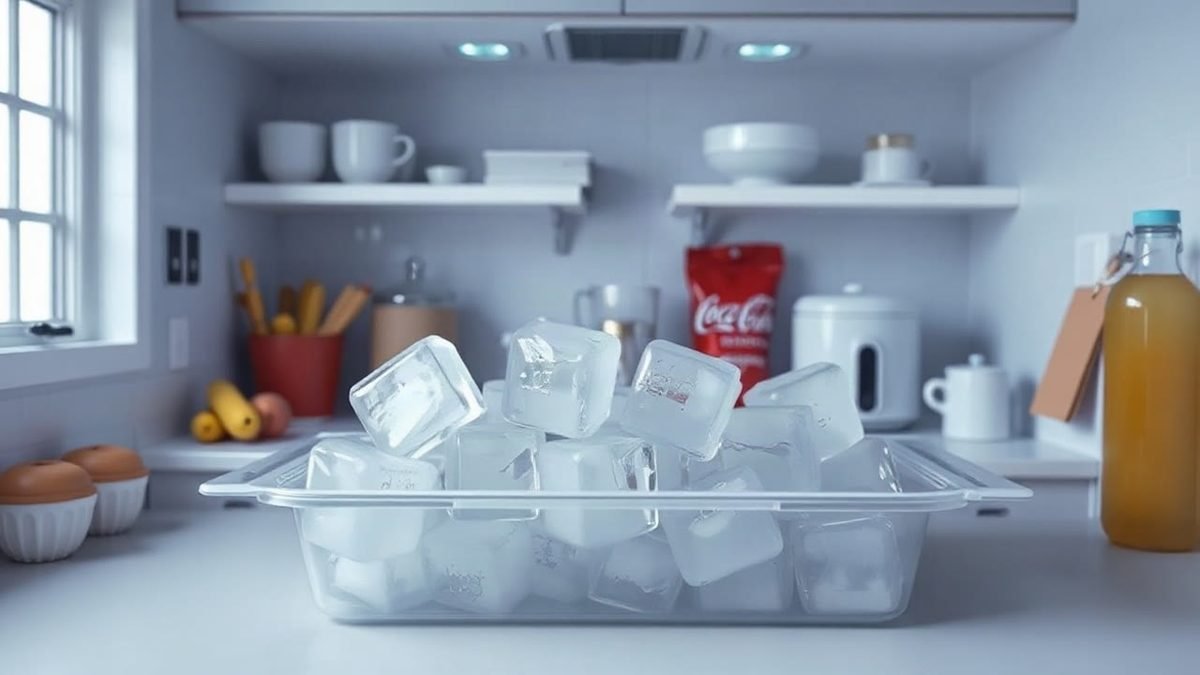

Why do ice cubes shrink in the freezer over time?
Ice cubes shrink in the freezer because of a process called sublimation: even in a freezer, ice can gradually turn from solid directly into vapour without melting first, a process known as sublimation. Left long enough, a full-sized cube can lose a noticeable amount of its bulk, becoming smaller, cloudy and sometimes with rounded, eroded edges. It is the same reason an unopened bag of ice in the deep freeze gradually slumps into a solid, shrunken lump.
The good news is that sublimation is slow, predictable and easy to manage. Once you understand why ice cubes shrink in the freezer over time, a few simple habits will keep your cubes full-sized, fresh-tasting and ready for drinks whenever you need them.
Key takeaways
- Ice cubes shrink because of sublimation: frozen water turns directly into vapour in the cold, dry air of your freezer.
- An open or poorly sealed freezer, frequent door opening and frost-free cycles all speed the process up.
- Shrunken ice also picks up freezer odours, so older cubes can make drinks taste off.
- Storing cubes in an airtight bag or container dramatically slows shrinking and keeps them tasting clean.
- Using cubes within a few days to a couple of weeks is the simplest fix of all.
What is sublimation, exactly?
Most of us learn that ice melts into water and water evaporates into vapour. Sublimation skips the liquid stage entirely: solid ice turns straight into water vapour. This can happen below 0°C, which is precisely why it takes place inside your freezer.
Sublimation happens because water molecules are always jiggling about, even when frozen. The molecules at the surface with the most energy occasionally break free and escape into the surrounding air. The ice does not need to melt for this to occur; it just needs exposed surface and air that is not already saturated with moisture.
Why the freezer is the perfect environment for shrinking ice
Freezers are cold, but the air inside them is also remarkably dry, and that combination is what drives the problem.
Dry air pulls moisture out of ice
Very cold air holds very little moisture. When relatively humid air meets a frosty freezer coil, the moisture condenses and freezes onto the coil as frost, leaving the circulating air dry. Dry air acts like a sponge for water vapour, so it continuously draws molecules off the surface of your ice cubes.
Frost-free freezers make it worse
Self-defrosting (frost-free) freezers periodically warm their coils slightly to melt away accumulated frost, then vent that moisture outside the freezer. This is brilliant for preventing ice build-up on your freezer walls, but it means the moisture leaving your ice cubes is actively removed from the compartment rather than hanging around to slow further sublimation. In a frost-free freezer, ice can shrink noticeably within a couple of weeks.
Temperature fluctuations speed things up
Every time you open the freezer door, warmer, moister air rushes in and colder air spills out. The temperature swings that follow give surface molecules an extra energy boost, encouraging them to escape. A freezer that is opened often, or one that struggles to hold a steady temperature, will shrink ice faster than one that sits undisturbed.
Why do shrunken cubes also taste weird?
Shrinking and flavour damage tend to go hand in hand. As ice sits in the freezer, two things happen at once: sublimation removes the outer layer of the cube, and the porous, roughened surface that remains absorbs odours from the surrounding air. Frozen food, onions, leftovers and even the freezer lining itself all release aromatic compounds that ice readily picks up.
This is why a cube that has been rattling around the tray for a month can make a glass of water taste like the inside of your freezer. If off-tasting ice is a recurring frustration at your house, we have a whole guide on why ice tastes of the freezer and how to fix it (https://theicetrayshop.com/why-does-my-ice-taste-of-the-freezer-causes-and-fixes/).
Sublimation can also leave cubes looking frosty and opaque, with a chalky white centre. Shrinking cubes often look cloudy because air and impurities in the water become more concentrated in the ice that remains.
How fast do ice cubes actually shrink?
There is no single answer, because the rate depends on your freezer, but the variables are easy to understand:
- Sealed versus exposed: loose cubes in an open tray shrink far faster than cubes in a closed bag or lidded container, because a barrier of trapped, saturated air forms around sealed ice and slows further escape.
- Frost-free versus manual defrost: frost-free models actively remove moisture, so they pull from your ice more aggressively.
- Surface area: smaller or crushed ice has more surface per gram than large cubes, so it sublimates and stales faster. Large, solid cubes hold up best.
- Door habits: a busy household freezer that gets opened twenty times a day will shrink ice quicker than a quiet chest freezer in the garage.
As a practical rule of thumb, cubes used within a week or two will look and taste little different from fresh ones. Beyond a month in a frost-free freezer, expect visible shrinking and a noticeable decline in flavour. This is exactly why bagged ice left at the back of the freezer for months ends up as a shrunken, fused block.
Is shrunken ice safe to use?
Yes. Sublimation is a purely physical change: the water molecules that leave are simply gone, and the ones that remain are still frozen water. Sublimated ice is not spoiled or contaminated by the process itself. The only genuine concern is flavour and quality, since older ice absorbs freezer odours, and ice made from unfiltered tap water concentrates any dissolved minerals and chlorine as it shrinks.
If a cube smells odd, looks discoloured or has been sitting uncovered next to a strong-smelling food for months, the kindest thing is to tip it out and freeze a fresh batch. Ice is one of the cheapest ingredients in the house.
How to stop ice cubes shrinking (and going stale)
You cannot switch off physics, but you can make it work much more slowly in your favour.
1. Store cubes in an airtight container or bag
This is the single most effective fix. Once a sealed container is full of air that has absorbed as much moisture as it can hold, sublimation slows to a crawl. A zip-lock bag with the air pressed out, or a lidded tub, keeps cubes full-sized and protects them from picking up freezer smells.
2. Batch and rotate
Freeze a fresh batch every week or two and use the oldest first, just as you would with anything perishable. A simple rotation habit means you are never serving months-old ice.
3. Use ice made with good water
Starting with water that tastes good to you is a simple way to get cubes you enjoy, and many people prefer filtered water for this. If your tap water is heavily chlorinated, this alone makes a big difference.
4. Keep the door closed
Decide what you want before you open the freezer, and keep the door open for seconds rather than minutes. Fewer and shorter door openings mean fewer temperature swings and slower moisture loss.
5. Check your door seal
A perished or dirty door gasket lets humid kitchen air seep in continuously, which speeds up both sublimation and frost build-up. Wipe the seal regularly and replace it if it no longer grips a piece of paper firmly when the door is shut.
6. Choose the right tray or mould
Larger moulds produce bigger cubes with less surface area relative to their volume, so they shrink and stale more slowly. If cubes are clinging to the mould when you try to release them, our tips on why cubes stick in a silicone mould (https://theicetrayshop.com/why-cubes-stick-in-silicone-mould/) will sort that out in seconds.
Does this happen to other frozen foods too?
It does, and you have probably seen it: that is freezer burn. Freezer burn is the same sublimation at work on meat, bread, vegetables and anything else left exposed in the freezer. Moisture escapes from the surface, leaving dry, discoloured, leathery patches. The food remains safe to eat, but the texture and flavour suffer.
Knowing this makes the fix obvious across the board: airtight packaging protects ice cubes and Sunday roast alike. Wrapping food tightly, squeezing air out of bags and using rigid containers all work because they trap a moisture-saturated boundary layer around the food.
A neat trick: use flavoured cubes before they fade
Sublimation matters even more for specialty cubes. Coffee cubes, herb cubes, citrus cubes and fruit purée cubes all lose their aromatic punch as their surfaces erode and pick up freezer smells. Since their whole point is flavour, they deserve the shortest stay in the freezer of anything you own. For a practical example, see our guide to coffee ice cubes and keeping iced coffee from going watery (https://theicetrayshop.com/coffee-ice-cubes-how-to-keep-iced-coffee-from-going-watery/).
The pattern is always the same: freeze in batches small enough to use within a fortnight, keep them sealed, and enjoy them young.
FAQ
Why do my ice cubes shrink even though the freezer is working fine?
Because sublimation happens at any freezer temperature. Cold, dry air slowly pulls water molecules straight off the surface of the ice as vapour. A perfectly healthy freezer will still shrink uncovered ice over weeks and months, especially a frost-free model that actively removes moisture from the air.
How long can I store ice cubes?
For best flavour, use cubes within one to two weeks. Sealed in an airtight bag or container, they stay in good condition for a month or more. After several months, expect visible shrinking, cloudiness and a stale or “freezer” taste.
Can I restore a shrunken ice cube?
No. The lost water has escaped into the air as vapour and cannot be put back. You can rinse off any surface frost or dust, but the cube will remain smaller and may still carry freezer odours. Fresh batches are always the better option.
Does ice shrink faster in a frost-free freezer?
Generally, yes. Frost-free freezers run their defrost cycles regularly, and the drier circulating air encourages sublimation, so ice can shrink faster in them. Manual-defrost freezers tend to be a little kinder to ice, so cubes generally keep their shape for longer there.
Why do ice cubes in the bag from the shop fuse into one lump?
When cubes touch, moisture on their surfaces can refreeze at the contact points, especially as bags are moved and temperatures shift during storage, so the cubes gradually bond into a solid mass. The bag itself slows further shrinking, but it cannot prevent cubes touching from joining up.
The bottom line
Ice cubes shrink in the freezer because sublimation lets frozen water escape directly into the cold, dry air, a process your frost-free freezer actively encourages. The fix is wonderfully low-effort: seal your cubes in an airtight bag or container, rotate your stock, and aim to use them within a couple of weeks. Your gin and tonic will thank you for it.
Want cubes worth storing properly in the first place? Browse our ice trays and moulds to find the right shape and size for your freezer and your drinks.