
Why the centre of an ice cube looks cloudy
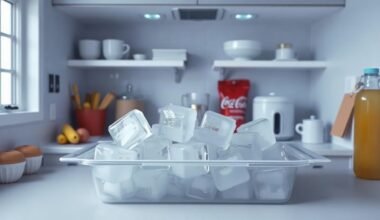
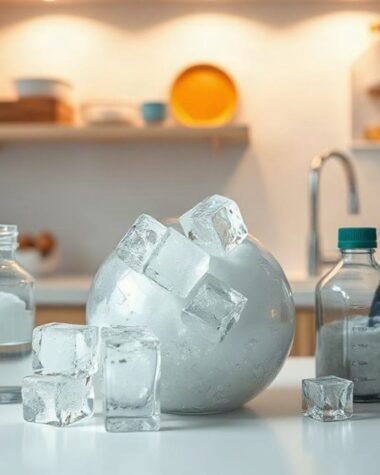
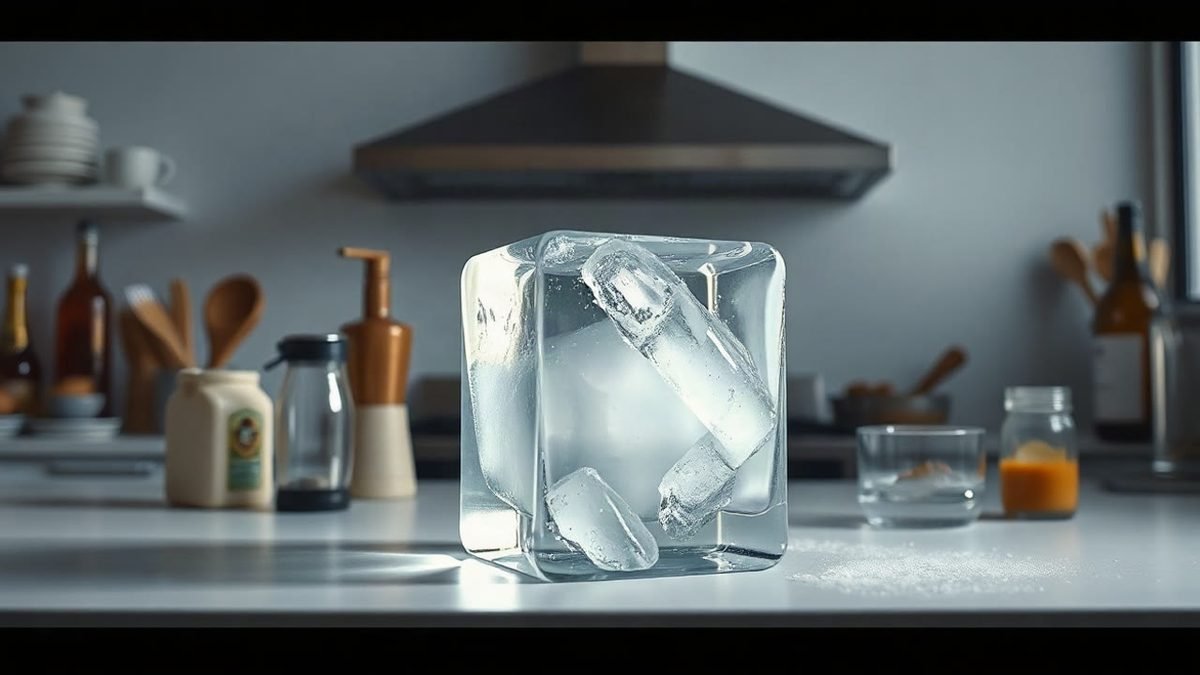
The centre of an ice cube looks cloudy because dissolved air and tiny amounts of minerals get pushed inward as the water freezes from the outside in. The last pocket of water to freeze ends up surrounded by ice, so the trapped gases and impurities form microscopic bubbles that scatter light and make the middle look milky or white.
In other words, cloudy ice is not dirty ice. It is simply a record of how the water froze, and it is completely normal.
Key takeaways
- Ice is frozen from all sides in a normal freezer tray, so air bubbles and dissolved solids get pushed to the centre, which freezes last.
- Ice itself is transparent; the cloudy look comes from tiny bubbles and particles scattering light, not from the water being dirty.
- Boiled, cooled and filtered water, plus slower or directional freezing, all help you get clearer cubes.
- Cloudy ice is safe to use and is not a sign of spoilage or contamination.
- You can make bar-style clear ice at home using a small insulated cooler or a directional-freezing setup.
What is actually inside your tap water?
It is tempting to assume cloudy ice means low-quality water, but that is usually not the case. Drinkable tap water contains far more than pure H2O. It holds dissolved nitrogen and oxygen from the air, plus varying amounts of calcium, magnesium and other dissolved solids. These substances are harmless at normal drinking-water levels, but they do not all fit neatly into the growing structure of an ice crystal, as WIBIMEN explains.
Even crystal-clear, freshly poured tap water will usually freeze into a cloudy cube. That is because much of the cloudiness comes from dissolved air, not visible dirt. You cannot see dissolved gases in a glass of water, but they are there, waiting to be squeezed out as the water solidifies.
Why does the freezer make the middle milky?
Here is where the physics comes in. In a standard ice tray, freezing happens from the outside in. The walls of the tray pull heat away from every surface at once, so ice crystals start forming at the top, bottom and sides simultaneously.
As the freezing front advances, the ice rejects the dissolved gases and many of the dissolved solids, because they do not fit into its crystal structure. Those rejected substances get pushed ahead of the front, into the shrinking pocket of liquid water at the centre. When that final pocket eventually freezes, it is packed with concentrated air and impurities that form countless tiny bubbles, as Ice Makerz describes.
Why bubbles make ice look white
Ice, in its pure form, is transparent. The white appearance comes from light scattering. Each microscopic bubble and particle boundary bounces light in a slightly different direction. When there are thousands of them clustered in the middle of the cube, the light bounces around so much that the centre looks opaque or milky, even though the surrounding ice is clear, according to ScienceABC.
Why bars get it right
The giant, glassy cubes you see in high-end cocktails look different because of how they are made, not what they are made from. Bartenders freeze water in one direction only, often using insulated moulds or small coolers, so the freezing front moves from the top down. That gives the air and impurities somewhere to go: they collect at the bottom, which is then cut off or discarded, leaving a block of beautifully clear ice behind.
Does freezing speed matter?
Yes, it matters quite a bit. Rapid freezing is one of the biggest reasons home ice cubes turn cloudy. When water is cooled quickly, there is no time for the air and impurities to escape, so they get locked into the ice wherever the freezing front catches them, as ScienceABC notes.
Slower freezing gives dissolved gases more opportunity to escape or gather in one place rather than being trapped throughout the cube. Freezer cycling, mould geometry and water quality can all influence the final result too, but the direction of freezing is the dominant factor, according to WIBIMEN.
Is cloudy ice bad for you?
No, and this is worth repeating. Cloudy ice is a common issue and is not a sign of spoilage or contamination, as the Ice Makerz team points out. As the Ice Makerz team notes, it is a common issue and not a sign that anything has gone wrong with your ice.
The cloudiness comes from ordinary dissolved air and minerals that were already in your drinking water. Unless your water source itself is unsafe, the ice made from it is fine to use. Clear ice is a matter of appearance, not safety.
How to make clearer ice cubes at home
If you like the look of crystal-clear ice in your drinks, the good news is that you do not need a commercial ice machine. Sommelier Michele Gargiulo notes that you can make clear cubes at home using something as simple as a small cooler, and there are several tactics that help:
- Boil the water first. Boiling drives off much of the dissolved air. Let it cool afterwards, because hot water in a freezer is inefficient and can affect other frozen foods.
- Use filtered or distilled water. This reduces the dissolved minerals that contribute to cloudiness, although air bubbles remain the main culprit.
- Freeze slowly. A slightly warmer freezer setting (within food-safe limits) slows the freezing front and gives gases a chance to escape.
- Try directional freezing. Fill a small insulated cooler with water and leave the lid off in the freezer. The water freezes from the top down, pushing air and impurities towards the bottom. Cut away the cloudy layer and slice the clear block into cubes.
- Use cooled, freshly poured water. Some people find that letting water sit briefly before freezing helps, and boiling the water first is another way to reduce the dissolved air that causes cloudiness (see tip one).
Directional freezing is the method most home enthusiasts swear by, and it genuinely works with kit you probably already own. If you are experimenting with different moulds, it is worth knowing how to get results you can rely on; our guide to why cubes stick in a silicone mould (and how to stop it) covers one of the most common frustrations, and our article on coffee ice cubes shows the same freezing principles at work in a different context.
Common questions about cloudy ice, answered
Does cloudy ice taste different?
Only marginally, if at all. The main difference is appearance: trapped air and impurities are what make cloudy ice look milky, but they do not change how well it chills your drink. In terms of flavour, most people cannot tell the difference between clear and cloudy cubes made from the same water.
Why is only the centre cloudy and not the whole cube?
Because the outer edges freeze first, they form clean, bubble-free ice before the gases are rejected and concentrated. The centre is the last part to freeze, so that is where the trapped air and particles end up, all squeezed into one small area.
Do I need expensive equipment for clear ice?
No. A small hard-sided cooler in your freezer is the classic budget method for directional freezing. Clear silicone or plastic moulds designed for large cubes can help too, though they usually still produce some cloudiness unless they insulate the sides to encourage top-down freezing.
Can a dirty ice tray cause cloudy ice?
Dirty trays can add particles to the water and worsen the look, but they are not the root cause. Dissolved air and minerals are the main reasons for cloudiness. Keeping your trays clean and free of freezer smells is still worthwhile; if yours have picked up odours, our guide to why silicone ice cube trays smell and how to fix it will sort that out.
Does distilled water guarantee clear ice?
No. Distilled water removes minerals but still contains dissolved gases, so it can freeze cloudy. Boiling the water first and using slow or directional freezing makes a much bigger difference than water type alone.
Which water works best for clear ice?
Water choice makes a noticeable difference, though no tap water will give perfectly clear cubes without the right freezing method. Filtered water, passed through a simple jug filter or a fridge filter, removes some of the chlorine and dissolved minerals that contribute to cloudiness. Distilled water goes further, because it contains very few dissolved solids in the first place.
That said, boiling water before freezing it is a popular budget trick. Boiling drives off some of the dissolved air, which is one of the main causes of cloudiness, so boiled water can freeze clearer than water straight from the tap.
One thing to avoid is over-chilled or previously frozen water, which can freeze unevenly and give patchy results. Fresh, cold water straight from the tap or filter jug is the better starting point.
Does cloudy ice affect the taste of a drink?
Cloudy ice is mostly a cosmetic issue, but taste can come into it. The trapped air bubbles themselves are flavourless, so a cloudy cube made from clean, fresh water will taste much the same as a clear one. What matters more is what the ice has absorbed from its surroundings.
For the best-flavoured drinks, make ice from fresh water and store it in a sealed bag or lidded container so it does not pick up flavours from other foods in the freezer.
So if your cloudy cubes taste clean and neutral, there is no need to change anything. If they taste off, the freezing water or freezer storage is the culprit, not the cloudiness itself.
Frequently asked questions
Why is my ice cloudy in the middle but clear at the edges?
Because the edges freeze first, pushing air and impurities towards the centre, where they become trapped as the last water solidifies.
Does hot water make clearer ice?
Some home ice makers use hot water, and the Mpemba effect (hot water freezing faster under certain conditions) is a real, if debated, phenomenon. Results vary by freezer, so it is worth experimenting, but hot water alone will not guarantee clarity.
Can I refreeze melted ice cubes?
Yes, and the refrozen cubes will often look even cloudier, since dissolved gases concentrate as the ice melts and refreezes. Better to use fresh water each time.
The bottom line
Cloudy ice is not a flaw in your water or your freezer; it is just physics. Air and minerals get pushed to the centre as water freezes from the outside in, and the resulting bubbles scatter light. If you fancy café-worthy cubes in your next drink, try boiling your water first or setting up a simple directional freeze in a cooler. Your cocktails will look every bit as good as they taste.