
Short answer: Ice tastes of the freezer when cubes sit in air that carries food smells, or when the water already had a chlorine or mineral taste. Old ice and open trays make it worse. Bin the cubes, wash the tray, freeze fresh water under a lid, and clean the smells out of the freezer. Those steps, done together, are what usually brings a plain taste back.
In this guide
- What that taste is telling you
- How ice absorbs freezer odours
- The water you freeze
- Old ice and open trays
- Food, spills and freezer temperature
- A practical fix list
- Clean the freezer without flavouring the ice
- Where bicarbonate of soda fits
- Keep the next batch tasting plain
- FAQ
- Sources
What that taste is telling you
The freezer is not adding a flavour the way salt does. Ice is frozen water. A stale, metallic, fishy or plastic-box taste means the water went in that way, or smells from the air settled on the ice while it sat.
Smell a cube, then the empty tray, then the water you would freeze next, then the air in the freezer. Start with whichever smell matches the drink. A smelly cabinet needs a clean and a lid more than it needs a new filter. Water that smells at the tap needs dealing with before it is frozen.
How ice absorbs freezer odours
Freezer air carries traces of whatever is stored in it. Fish, smoked meat, onions, garlic, blue cheese, spiced leftovers and open tubs of herbs are the ones most people notice. Spills of juice, soup or melted ice cream carry on releasing smell after the packet is in the bin. Each time the door opens, that air moves.
An open ice tray is a wide surface left in that air for days. Odour compounds land on the water while it is liquid and on the cubes after they freeze. Given time, they sit in the outer layer. Food in a sealed box gives off much less. Bare ice has no barrier.
Frost-free freezers make this easier to notice. A fan and dry cold stop thick frost, and that moving air also spreads smells and dries uncovered ice. Cubes shrink as water leaves as vapour, and the edges turn white and chalky. An off taste can seem stronger because less plain ice is left. In a busy kitchen this can show within a fortnight. If the door stays shut it may take a month or more. That is a rough range, not a fixed limit.
Freezers with no fan pass smells through still air, so position matters. A tray under a leaking bag of prawns picks up seafood long before a tray on the other side of the cabinet. Wash a smelly liner before you freeze new water.
The water you freeze
Freezing does not filter water. It keeps the taste you started with. UK tap water is treated so it is safe to drink, and chlorine or chloramine is part of that treatment. Ice can taste more chemical than a glass from the same tap, because a cube melts with little to dilute it, and cold makes those notes stand out.
If the cold tap smells like a swimming pool, the ice will too. A few hours in a loosely covered jug in the fridge can soften free chlorine. It does little for chloramine, which is more stable, and it does not remove minerals. A chalky or metallic taste points to hard water, which varies widely by supply. Your water company publishes a hardness figure for your area. Check that before you blame the freezer.
A jug filter reduces chlorine taste and some minerals. A cartridge past its date can taste musty, and that taste gets blamed on the freezer, so change it on the schedule printed on the pack. Boiling, then cooling fully on the worktop before freezing, drives off some dissolved gas and some free chlorine. The ice is often clearer. Any taste change is usually modest. Never pour hot water into a thin plastic tray or onto a cold glass shelf.
Old ice and open trays
Ice left for weeks is the usual reason a drink tastes wrong when you have added no new food. Cubes at the front, in the path of warmer air, fade first. Cubes at the back can still taste plain, so one glass seems fine and the next does not. The batch has not all aged at the same speed.
Look for smaller cubes, white chalky edges, a stuck lump, or a tray that smells before it melts. A drink that is fine without ice and odd with it points the same way. Homemade ice has no use-by date. Renew an open tray every week or two, and avoid a spare bag kept for months. That is a habit for taste, not a safety deadline. If it smells stale, replace it.
A lid, a freezer bag with the air pressed out, or a lidded box slows both smell pickup and drying. Leave a gap at the top of each compartment. Water expands as it freezes. A tray filled to the brim spills, sticks to the shelf, and leaves a thin film that collects dust and odour.
Scratches in old plastic hold smells. A tray that still smells after a hot wash and a full rinse will flavour the next water you pour in. Silicone is not immune. Keep ice trays for water only, and retire any tray that has held soup, stock or a marinade.
Food, spills and freezer temperature
Smell gets into the ice when wrapping is poor, not merely because strong food is in the freezer. A split bag, loose foil or a plate used as a lid is enough. Fish and seafood, onions, garlic, spiced leftovers, smoked fish, pungent cheese and open herbs are the foods that usually travel furthest in a UK freezer. Drips from a bag of prawns on the shelf above will mark the cubes below.
Spills matter as much as packets. Fruit, meat juices and melted ice cream leave a smear that smells after you have wiped up what you can see. Cold slows bacteria. It does not switch smell off. The Food Standards Agency chilling guidance is to keep a freezer at -18°C, because that temperature slows harmful bacteria and makes spoilage less likely. A freezer that holds this, is not jammed solid, and seals at the door is also less likely to scent the ice.
After a power cut or a door left ajar, throw the ice away with any food you do not trust, then wash the cabinet. If the freezer stayed cold and food is in date and wrapped, a freezer taste is a quality problem. On its own, it does not show that the ice is unsafe.
A practical fix list
Go through these in order. Wiping the shelf and then drinking the old ice will not tell you whether anything has improved.
- Bin every cube in the current batch. One cube that tastes of the freezer means the rest have shared the air.
- Wash the tray in hot water with a little unscented washing-up liquid. Rinse until no bubbles and no scent remain. Dry it in the air, not on a tea towel that smells of detergent.
- If the tray still smells, soak it for a few minutes in water with a spoonful of bicarbonate of soda, then rinse and dry it again. If the smell is still there, stop using that tray for ice.
- Remove food that is leaking, undated or clearly spoilt. Close bags and boxes of anything strong, pressing out spare air.
- Wash the shelf, the door seal and any sticky drip with warm water and a drop of unscented liquid, or with diluted white vinegar. Rinse and dry.
- Bring the freezer back to -18°C, as noted above, and let it get fully cold before you add water.
- Fill the clean tray with fresh cold water, cover it, and freeze it away from fish and leftovers. A shelf above raw meat is a better spot than one underneath.
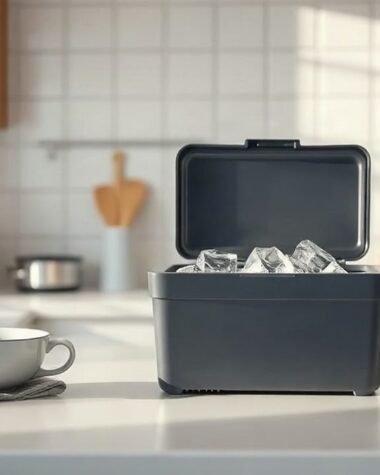
- When the cubes are solid, tip them into a clean lidded box or a freezer bag with the air pressed out if you need the tray back. Write the date on the box if you often lose track.
Match the taste to the cause, then do the matching step.
| Cause | What you notice | What to do |
|---|---|---|
| Open tray | Stale or food-like taste | Cover the ice |
| Old ice | Smaller cubes and white edges | Bin the batch and remake |
| Tap water | Chemical or chalky taste in new cubes | Change the water |
| Spills or unwrapped food | A distinct food smell | Seal the food and wash the shelf |
Taste one new cube in water you already trust. If it is clean, carry on. If it still tastes of the freezer, the cabinet or the tap is still the source. Smell the empty freezer and start from that.
Clean the freezer without flavouring the ice
Leave scented sprays, scented wipes and essential oils out of the freezer. They move into ice just as food smells do. Warm water with a splash of white vinegar, or bicarbonate of soda on a damp cloth, is enough for sticky shelves. Rinse. Vinegar left behind tastes sharp in the next drink.
Dry the walls before you switch the freezer on. If frost is thick, defrost first: move the food to a cool box, switch off, and let the ice melt into towels. Do not chip it off with a knife.
Where bicarbonate of soda fits
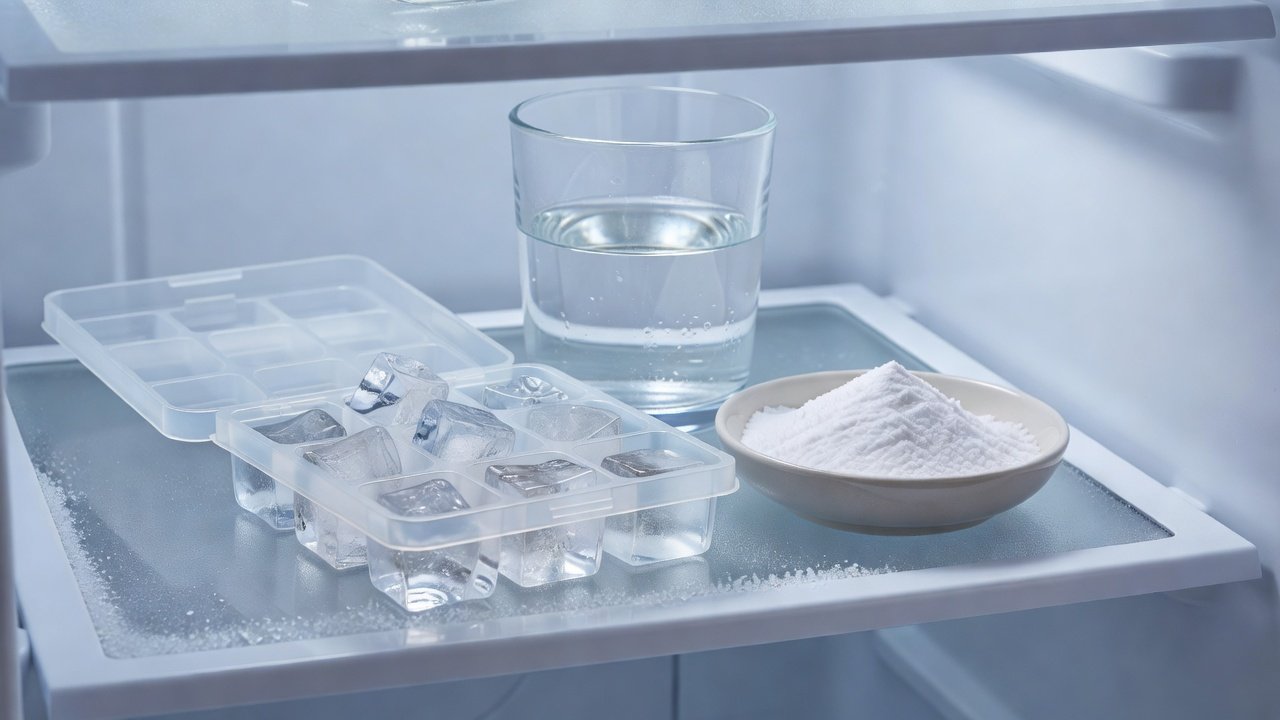
Bicarbonate of soda, also sold as baking soda, takes up some stale smells in a freezer you have already cleaned. It does not perfume the cabinet, it does not replace lids, and it will not fix cubes that already taste off. Once the shelves are dry, put a small open dish near the ice, not touching the cubes.
Stir it now and then so a crust does not seal the surface. Replace it every few months, or sooner if it clumps or if smells remain a week after cleaning. Keep it dry. A soaked box stops working.
Keep the next batch tasting plain
Freeze a week or two at a time. Cover the tray, or box the cubes once they are frozen. Seal strong food, wipe spills the same day, and wash trays with the ordinary washing-up.
FAQ
Is ice that tastes of the freezer safe to drink?
Where the freezer has stayed cold, and food is in date and wrapped, this is a quality issue. The flavour comes from cabinet air or from the water. If the power has been off, the door was left ajar, or you can smell spoilage, discard the ice and any food you do not trust. Clean the cabinet and freeze a new batch.
Why does fresh ice taste fine when the older cubes do not?
Newer cubes have had less time in the air. Older ones, especially at the front of an open tray, have absorbed more smell and may have dried at the edges. Freeze smaller amounts more often, and cover them, if you want the glass to taste like the new batch.
Will a filter stop ice tasting of the freezer?
A filter can improve chlorine or mineral taste in the water you pour in. It does not stop smells landing on open cubes later. Food-flavoured ice needs a clean cabinet and a lid. Chemical-tasting ice needs different water. An open tray of filtered water will still pick up a smelly freezer.
How long can I keep homemade ice?
There is no official date. Refresh an open tray every week or two. Covered ice stays plainer for longer, but frost-free freezers still dry it out slowly, and a strong smell can still get through. Chalky, shrunken or stale-smelling cubes should be replaced whatever day you made them.
Can bicarbonate of soda flavour the ice?
Only if it gets into the water. In its own open dish it should not scent the cubes. Do not stir it into the tray. Bicarbonate tastes salty and alkaline once it is dissolved. If a spill reaches the ice, bin that batch and wash the tray. Replace the dish every few months, or when it clumps.
Sources
Food Standards Agency, Chilling. Used for the advice to run a freezer at -18°C so that cold slows the growth of harmful bacteria.